Evaluating the Efficacy of a Hybrid Approach for Wound Management and Risk Prevention Utilizing a Comprehensive Wound Management Solution¹ in a 236-bed Long Term Acute Hospital (LTACH)²
Michael Seabock, RN WCC²; Rhett A. Gustafson, BA¹
¹ WoundRounds®, ² The Hospital for Special Care, New Britain, Connecticut
INTRODUCTION
The facility, a large LTACH with a high degree of acuity, has effectively combined centralized clinical expertise with decentralized care team access to a comprehensive wound management solution that helps the facility not only foster and sustain a culture of transparency, accountability, and performance improvement, but also helps reinforce the hospital’s culture of patient safety. The wound management solution provides the technology foundation for the hospital’s wound and skin integrity processes and protocols, unifying the facility’s care teams around easily-accessible documentation, wound reporting such as tracking and trending, and also dashboards displaying patients’ risk drivers for potential harm.
OBJECTIVE AND METHODS
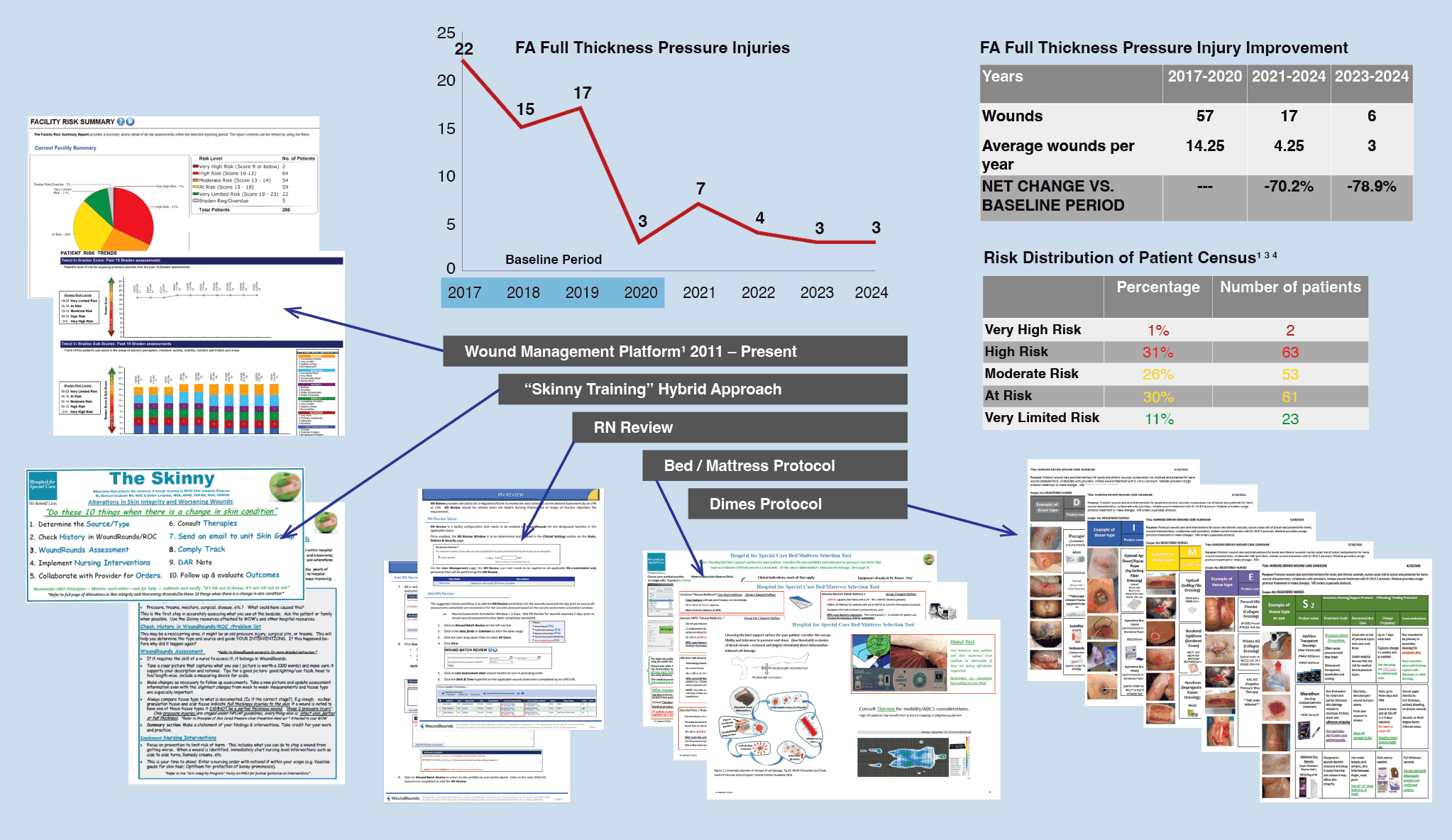
This study shows the advantages for the care team and significant clinical outcomes achieved through the integration of the hospital’s culture of patient safety with the utilization of a wound management solution to streamline and automate wound management processes over eight years. The author(s) analyzed the wound management solution 2017-2024 data set of the facility’s incidence of hospital acquired pressure injuries (HAPIs) in the context of the facility risk data, which demonstrated significant prevention outcomes gains in the context of a higher risk patient census. The authors further annotated the facility’s wound and Braden³ risk data with the chronology of patient safety-focused protocols the facility implemented over the measured period.
RESULTS
The facility’s full thickness HAPI rate improved by 70.2% from the four year baseline period to the last four years, and by 78.9% in the most recent two years. The facility’s distribution of patients skewed to the high risk side of the Braden Scale³, as 58% of the 236-patient census fall into the highest three risk categories using the Braden Scale for Predicting Pressure Sore Risk ³ ⁴.
CONCLUSION
The facility has effectively elevated its standards and quality of patient care and significantly improved patient wound outcomes by comprehensively integrating its culture of patient safety and tested nursing protocols, with a wound management system which empowers its care teams to maintain wound care and skin integrity excellence.
During 2021-2024, total area of Facility Acquired wounds managed averaged 10.5% vs Present on Admission wounds averaged 89.5% of the total. The underlying data, FA 12.85 ft² vs. POA 117 ft² (2021) FA 13.4 ft² vs. POA 113.56 ft² (2022) FA15.32 ft² vs. POA 121.56 ft² (2023) FA 12.86 ft² vs. POA 100.23 ft² (2024). A physical representation can be approximated by example of 2024 FA total area of 12.86 ft² of all changes in skin condition, which is represented by the white non-shaded area of this poster, vs 2024 POA total area of all changes in skin condition of 100.23 ft², which is represented by the light blue shaded area.
Total area of 2024 FA full thickness SCIC pressure injuries
REFERENCES
- WoundRounds wound management and wound risk management software solution, a service of Telemedicine Solutions, LLC.
- The Hospital for Special Care is a 236-bed Long Term Acute Care Hospital located in New Britain, Connecticut.
- Braden Scale for Predicting Pressure Sore Risk, Barbara Braden and Nancy Bergstrom, copyright, 1988.
- WoundRounds, Facility Risk Summary, snapshot reports, April 2025.
2024 total area of all FA SCIC 12.86 ft²